
Waste Water & Sewage Removal Guide in UAE 2026 – Construction & Residential
Everything you need to know about waste water removal, sewage tanker services and compliant disposal in the UAE.
Need Waste Water Removal?
Licensed vacuum tanker services for sewage, dewatering and waste water disposal.

The Raseen water tanker team supplies salt and non-potable water for construction, compaction, and dust suppression across Dubai and Sharjah. Our blog content is written from direct delivery experience — site access, response times, and tanker capacity — not from behind a desk.
TL;DR: Waste water and sewage removal in the UAE requires a licensed vacuum tanker operator. Whether you're clearing a blocked septic tank, removing grey water from a construction site, or de-sludging a temporary welfare unit, this guide explains how the process works, what regulations apply, and how to book a compliant removal service in Dubai, Sharjah, or Abu Dhabi.
Sewage and grey water removal is one of the most urgent maintenance issues a property owner or site manager can face. A full septic tank doesn't give much warning before it becomes a health hazard and a municipality violation. In the UAE, where many older Sharjah properties and active construction sites rely on tanker-based waste removal, knowing who to call and what to expect matters.
This guide covers the types of waste water tanker services available, the regulatory requirements in Sharjah and Dubai, and what a professional removal job should look like from start to finish.
What Is Grey Water and How Is It Different From Sewage?
Grey water is waste water from sinks, showers, and laundry that doesn't contain human waste. Sewage (also called black water) contains human waste from toilets and must be handled under stricter environmental protocols. Grey water can sometimes be treated and reused for irrigation under specific UAE permits, while sewage must always be transported to an approved treatment facility.
In practice on UAE construction sites, grey water comes from site welfare facilities: portable showers, hand-wash stations, and site canteen drainage. "Codder water" is a colloquial term sometimes used on Sharjah sites to refer to grey water mixed with light construction runoff. It requires vacuum tanker removal and cannot be discharged to the ground or stormwater drains.
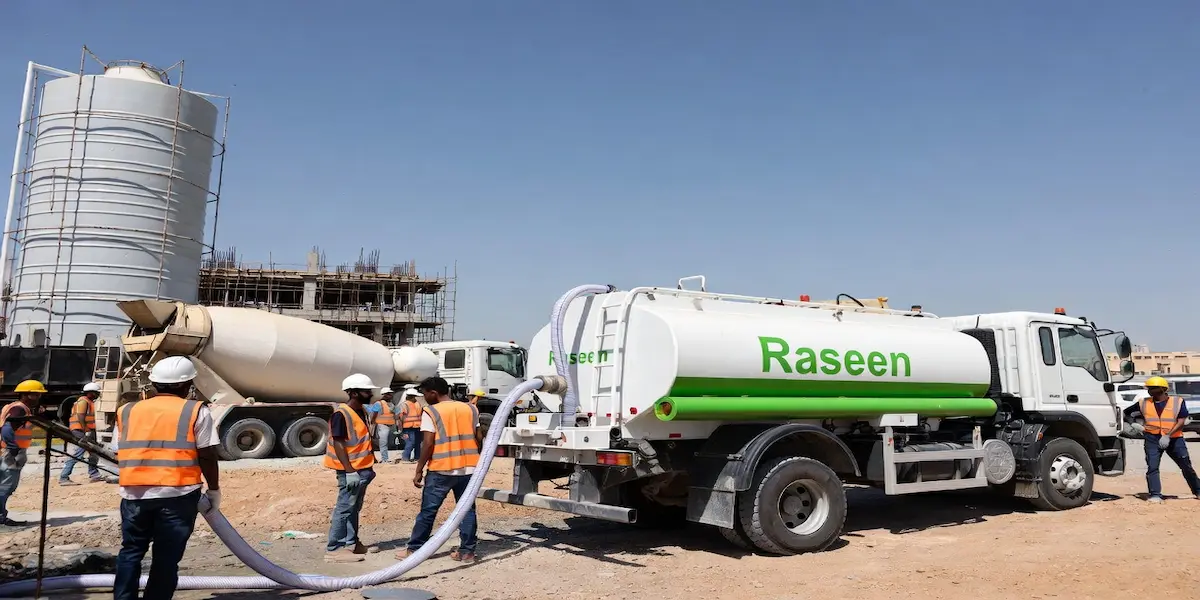
Raseen operates separate tankers for sewage and grey water. These vehicles are never cross-used for construction water supply. See our water services page for a full breakdown of tanker types.
When Does a Septic Tank Need Emptying in UAE?
A standard residential septic tank in the UAE should be emptied every six to twelve months under normal use. Signs it needs urgent attention include: slow-draining toilets and sinks across the property (not just one fixture), gurgling sounds from drain pipes, sewage odours inside the property or near the inspection covers, and wet or unusually green patches of ground above the tank or soakaway.
In older Sharjah districts like Al Qasimia and Al Mujarrah, many properties still rely on cesspits rather than mains sewerage. These require more frequent emptying, sometimes every four to eight weeks under heavy occupancy. Ignoring a full cesspit is a Sharjah Municipality violation and can result in fines under the SEWA environmental by-laws.
How Does Vacuum Tanker Sewage Removal Work?
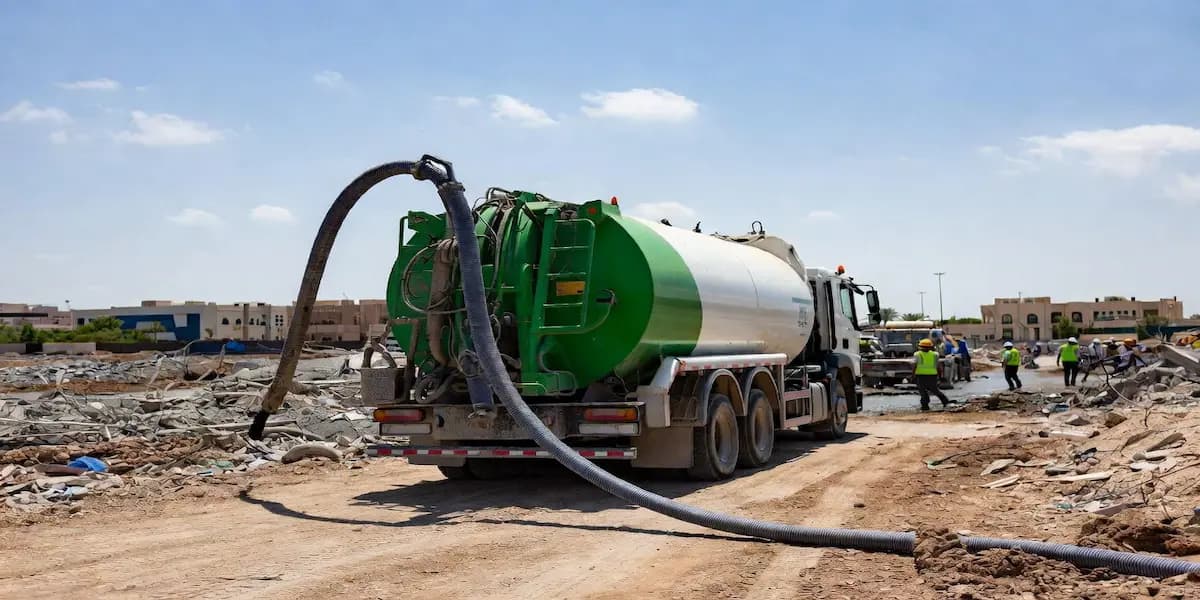
A vacuum tanker uses a powerful pump to create suction that draws liquid waste and sludge from the tank through a hose into the sealed vehicle tank. The driver locates the inspection cover, inserts the hose, and the pump does the work. A full residential septic tank (typically 3,000 to 5,000 litres) takes 20 to 40 minutes to empty.
Once full, the tanker transports the waste to a licensed treatment facility. In Sharjah, approved disposal facilities are licensed by Bee'ah, the emirate's environmental authority. Every licensed tanker operator should be able to provide a disposal certificate confirming the waste was treated correctly. Ask for this document if you need it for municipality compliance records.
Contact Raseen to book a vacuum tanker with disposal documentation included.
Construction Site Waste Water: What the UAE Regulations Require
Active construction sites generate grey water and sewage from welfare facilities daily. Under Dubai Municipality and Sharjah Municipality by-laws, all site waste water must be contained and removed by a licensed operator. Discharging to ground, roadside drains, or storm channels is a violation that attracts immediate fines and potential site stop notices.
Bee'ah and Dubai's Dubai Municipality Environmental Health department both conduct site inspections. A site manager caught with unmanaged sewage overflow faces fines starting at AED 5,000 and rising for repeat violations. Keep your disposal records from every tanker collection as part of the site health and safety file.
Rainwater Collection and Flooding: A Separate Service
Following heavy rain in the UAE (which occurs primarily between November and March), flooded properties and construction sites need rapid water extraction. This is a different service from sewage removal. Rainwater is generally uncontaminated and can often be discharged to approved points, but the physical extraction still requires a tanker or pump service.
Raseen operates rainwater collection tankers separately from sewage vehicles. If your plot or basement has flooded, contact us via WhatsApp with photos and the approximate volume. We'll advise on the appropriate extraction method and the nearest approved discharge point.
How to Book Waste Water Removal in Sharjah, Dubai, or Abu Dhabi
The fastest way to book is via WhatsApp. Send your location, a brief description of the job (septic tank, grey water, site welfare, flooded plot), and an estimate of the volume or tank size if you know it. We'll confirm availability and provide an AED quote.
For recurring site contracts, a scheduled weekly or fortnightly slot is cheaper than on-demand callouts. Raseen covers all Sharjah zones including Industrial Area, Al Nahda, and Al Majaz, plus Dubai and Abu Dhabi.
Frequently Asked Questions
How often should a septic tank be emptied in UAE?
For a standard residential property, every six to twelve months under normal household use. Properties with higher occupancy, older cesspits, or no connection to mains sewerage in older Sharjah districts may need emptying every four to eight weeks. If you notice slow drains, odours, or wet ground above the tank, call for emptying immediately rather than waiting for the scheduled date.
Is grey water the same as sewage in UAE regulations?
No. Grey water (from sinks, showers, and laundry) and sewage (from toilets) are classified separately under UAE environmental regulations. Grey water can sometimes be reused for irrigation under specific Bee'ah or Dubai Municipality permits. Sewage must always be transported to an approved treatment facility. Both require licensed tanker removal and cannot be ground-discharged.
What documentation should a sewage tanker operator provide?
A licensed operator should provide a disposal certificate confirming the waste was delivered to an approved treatment facility. In Sharjah, this facility is licensed by Bee'ah. Ask for the certificate at the time of collection and keep it in your site or property maintenance records. This document may be required during municipality inspections.
Can you remove waste water from a flooded property in UAE?
Yes. Raseen handles rainwater extraction from flooded plots, basements, and ground floors following UAE winter rainfall. This is a separate service from sewage removal and uses different tankers. Send your location and photos via WhatsApp and we'll advise on the extraction method and volume required. Contact us here.
Do you service construction site portable toilets and welfare units in Sharjah?
Yes. Site welfare facilities including portable toilets, temporary septic tanks, and grey water collection points all require scheduled vacuum tanker removal. We offer weekly and fortnightly site contracts for ongoing construction projects. Regular scheduling is cheaper per collection than emergency callouts and keeps your site compliant with Sharjah Municipality environmental requirements.
Sharjah Coverage
Waste Water Removal In Sharjah
Reliable tanker support for construction, demolition and commercial sites.
Ready to get started with scrap collection?
Get a competitive, written AED quote for scrap collection across Sharjah, Abu Dhabi, Ajman, or Dubai with instant collection.
Frequently Asked Questions About Sewage Water Removal
More Guides on waste water removal UAE
Clean Water Tanker Supply for Construction Sites in UAE – Potable & Freshwater Guide
Complete guide to clean water tanker delivery services including potable water and construction water supply in the UAE.